
Gamblers’ Digital Footprints: How to Recognise Users

Approaches to identification have undergone significant changes in recent years.
While online casino operators previously relied mostly on IP addresses, cookies, and authentication data, they are increasingly using more sophisticated methods today. One of them is device fingerprinting, which creates a unique profile for each personal gadget.
About the Concept
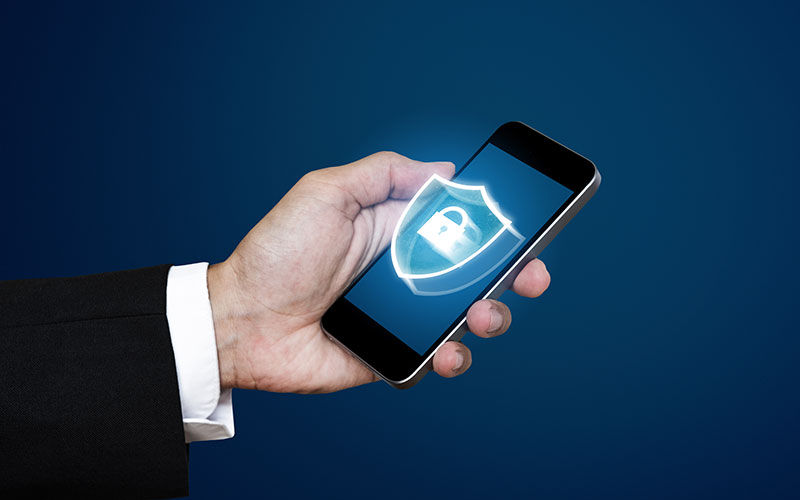
It means identifying a device based on its specifications.
Unlike traditional authorisation options, the system does not try to directly identify customers. Instead, it creates a so-called fingerprint — a unique profile that is generated automatically each time a user visits a gambling platform.
To create such a trail, dozens of browser, OS, hardware, and network environment parameters are analysed. Individually, most of these indicators are not unique, but their combination almost always has no analogue.
This is why 2 seemingly identical laptops with the same processor model, the same browser, and operating system will still have different digital footprints.
The first gadget identification methods appeared in the 2000s. They were initially used in the banking and e-commerce sectors — industries where companies regularly faced scams.
Later, the technology became widespread in the following sectors:
- online banking;
- payment services;
- marketing analytics;
- cybersecurity;
- anti-fraud platforms, etc.
With the rise of online gambling, device fingerprinting quickly became popular among virtual casino owners.
Why the Technology Is Used in the Entertainment Niche
Betting portals operate in one of the riskiest branches of the economy.
Things entrepreneurs face daily:
- multi-accounting;
- bonus abuse;
- use of stolen bank cards;
- payout fraud;
- circumvention of regional restrictions;
- re-registration attempts are blocked.
In many such schemes, attackers try to give the impression that they are using completely new devices. To do this, criminals change IP addresses, work through VPNs and virtual machines, as well as clear the browser with each subsequent login.
It is much more difficult to completely change the technical characteristics of a gadget than to hide an IP or delete cookies. This is why device fingerprinting is considered one of the most effective tools for detecting fraudulent activities in gambling.
What Tasks Are Solved by the Tool
Information about a gadget’s virtual trail is used at almost all stages of the player’s interaction with the entertainment portal: from registration and deposition of funds to withdrawals and formation of long-term loyalty.
Let us look at the main functions this technology performs.
Detection of Multi-Accounting

Creating multiple profiles by the same person is one of the most common problems in the iGaming niche. Such schemes are used to obtain welcome bonuses, participate in promotions, bypass limits, and re-register after a previous page has been blocked. This is where device fingerprinting is most effective.
With each new login and authorisation, the system compares the gadget’s digital footprints with the existing database. If various profiles are created or regularly activated from a single PC, the risk level automatically increases.
Modern algorithms are not limited to a complete match between traces. They take into account even minor changes to the device configuration, such as browser or operating system updates. Based on these factors, the program can still determine that it is the same user.
This analysis reveals:
- re-registration after the blocking of an account;
- bypassing internal restrictions and limits;
- participation of several linked profiles in the same bonus campaign;
- organised multi-accounting schemes.
In many cases, device fingerprinting allows operators to identify connections across several pages that would otherwise go undetected when analysing IP addresses or payment details.
Fight Against Fraud
A digital trace alone is not evidence of wrongdoing, but it does serve as a valuable source of information for the risk engine. When processing each financial transaction, the system analyses the device and dozens of other factors to accurately assess the likelihood of fraud.
The program checks whether:
- the gadget is known to the gambling portal;
- it first appeared in the system at the exact moment;
- it is associated with previously blocked accounts;
- it has been used in suspicious money transfers;
- the person’s current behaviour is typical;
- the device matches the profile of a specific client.
If a withdrawal request is received from a gadget that is simultaneously linked to multiple suspicious profiles, the system will automatically increase the risk level for such a transaction.
Protection of User Accounts
Almost all players have a familiar set of devices from which they regularly enter the casino: a home PC, laptop, smartphone, or tablet. Over time, the program remembers them and adds them to a list of trusted ones.
If customers log in from a well-known technology product, authorisation proceeds normally. However, in the case of a visit via a new gadget, the service may consider such activity potentially risky.
To pass additional inspection, clients may be asked to:
- confirm the entrance to the website with an SMS code;
- type in a one-time code from an e-mail;
- complete two-factor authentication;
- verify identity through a mobile app;
- undergo the verification procedure repeatedly.
Such measures reduce the risk of account takeover. Even if a fraudster gains access to a player's login and password, device fingerprinting will still prevent such unauthorised actions.
Compliance with the Law

Regulators in leading jurisdictions require licensed online casinos to take measures to:
- prevent fraud;
- combat money laundering (AML);
- protect gamblers;
- monitor financial transactions.
To meet these requirements, operators must not only verify the identity of their clients but also track suspicious signs.
In this context, device fingerprinting becomes an additional control instrument. With its help, entrepreneurs can circumvent geographic restrictions, activate blocked VPNs, and register on the entertainment portal again.
Furthermore, the tool records the use of a single device by several accounts and signs of organised fraud.
Information on digital footprints can also be used:
- during internal investigations;
- when resolving disputes with players;
- at the time of regulatory inspections.
How the Approach Works
The creation of a virtual fingerprint consists of several stages.
Collection of Technical Data
After opening the website, the browser automatically transmits numerous device characteristics. This includes the OS type and version, interface language, time zone, screen resolution, the list of fonts, installed plug-ins, supported codecs, etc.
Modern solutions can analyse several hundred such metrics simultaneously, including WebGL capabilities, Canvas API parameters, data about processors, and other technical nuances.
Development of a Digital Fingerprint
The information obtained is processed by specialised algorithms, after which a compact identifier is generated. This is a mathematically derived profile that reflects a combination of the device's selected characteristics.
Even if individual parameters change over time (for example, due to a browser or OS update), the algorithms will easily determine that the gadget is the same.
For more precise analysis, fuzzy matching methods are used. They take into account the degree of similarity between digital footprints but do not expect a full match.
Comparison with an Existing Base
After the identifier’s formation, the system likens it to the available records and checks:
- Has the device been used before?
- What accounts is it associated with?
- Has the device been involved in fraudulent operations?
- Are there any matches with gadgets or computers from internal blacklists?
- How much has its configuration changed since the previous visit?
Graph analytics are often used at this stage. They allow entrepreneurs to identify complex links between devices, accounts, IP addresses, and payment instruments.
Estimation of the Level of Risk
Fingerprints become one of the key factors when performing this task.
The system may increase the threat level if:
- the gadget has previously been used by a blocked player;
- multiple accounts are registered through it;
- signs of the use of VPNs or emulators are detected;
- the device’s configuration has changed dramatically in a short time;
- evidence of technical spoofing was uncovered.
Based on the final evaluation, the program makes a decision: allow the operation to be performed automatically, request additional verification, or refer the situation to the security service.
Limitations of the Technology
Despite its high efficiency, device fingerprinting is not a universal identification method.
The accuracy of recognition can be affected by:
- browser or OS updates;
- change of equipment;
- use of privacy protection features;
- anti-fingerprinting browsers;
- virtual machines;
- device emulators;
- browser spoofing.
Therefore, modern platforms almost never make decisions based only on the described technology. The tool is used in conjunction with KYC, behavioural analytics, anti-fraud algorithms, as well as the study of gaming sessions and payment data.
The Future of Device Fingerprinting

In the coming years, the role of this approach will only increase, and it will become more intelligent.
The basic directions of development include:
- The use of AI. Artificial intelligence will be able to analyse not only a complete concurrence of parameters but also determine the probability that 2 slightly different digital footprints belong to the same device.
- Integration with behavioural biometrics. In addition to the equipment's technical characteristics, the system will begin studying gamblers' actions. These are the typing speed, mouse cursor movements, scrolling patterns, features of screen touches, and other parameters.
- Analysis of gadgets in real-time. The program will be able to almost instantly determine the level of trust in a solution and make decisions even before critical actions are performed, such as entering the website, making deposits and withdrawals.
As artificial intelligence advances, device fingerprinting will no longer be just a recognition tool. It will evolve into a comprehensive ecosystem that can evaluate not only the technical characteristics of the equipment but also the context of user actions.
The Main Things about the Concept
Key aspects that operators should consider:
- The solution is used to detect multi-accounting, fight scammers or bots, and protect bona fide players. The support for device fingerprinting allows entrepreneurs to comply with KYC/AML requirements, as well as local legislation.
- The identification process takes place in several stages. This involves the collection of baseline data, creation of a digital trail, its comparison with an existing data set, and estimation of the level of risk.
- The technology’s future lies in the application of AI algorithms and behavioural biometrics, real-time device analysis, and immediate detection of deviations.
We also offer turnkey projects that help operators quickly enter the market and take the lead in the industry.
- e-mail: info@2wpower.com
- Telegram: @Win2Power
Please be careful! We have noticed that scammers are using our contact details to deceive customers.
For security reasons, please use only the contact information provided on the page https://2wpower.com/en/feedback
Our company is not responsible for the actions of fraudsters.










 DEMO
DEMO